- Home
- Infochannel
ECMI Infochannel
2023-12-14
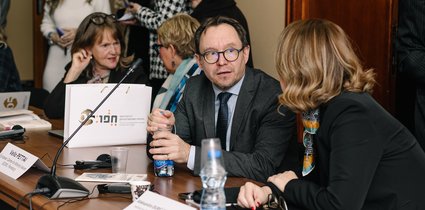
ECMI Addresses Key Challenges at the "Challenges of Monitoring in the European Multicultural Environment" ConferenceThe ECMI, represented by its Director Vello Pettai and Senior Researcher Ljubica Djordjević, significantly contributed to the international scientific conference titled "Challenges of Monitoring in the European Multicultural Environment" hosted by the Institute of Social Sciences, Belgrade.
2023-12-11
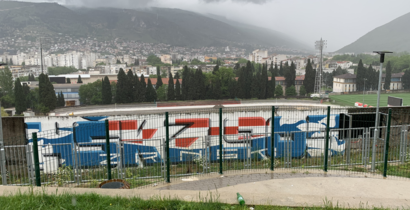
ECMI Minorities Blog. Ethnic Identity and Football in Mostar – A Clear Divide along the Old Front LineCraig Willis
This blogpost addresses the question of how ethnic identities (and societal divisions) in the city of Mostar, Bosnia and Herzegovina, are expressed through football and considers how this dominates the city’s linguistic landscape. It is therefore embedded in the context of previous literature on sport and identity but also the discipline of sociolinguistics. The post discusses the prominence of street murals and graffiti relating to Mostar’s two football clubs, FK Velež Mostar and HŠK Zrinjski Mostar, outlining how the situation is very much territorially divided along the same geographical points of the ethnic conflict in the early 1990s.

2023-12-10
ECMI Researcher Elmira Muratova Explores Crimean Tatars' Resilience in the Face of AnnexationDr. Elmira Muratova, a recent addition to the ECMI's research team, captivated audiences with her recent engagements in the academic arena, shedding light on the dynamics faced by the Crimean Tatar community post the 2014 annexation of Crimea at both the Humboldt University Lecture Series and the George Washington University's Petrach Program on Ukraine.
2023-12-06
Call for Papers for Global Autonomy Network Group (GANG) Workshop: "Navigating Change. The Resilience of Territorial Autonomy"We are delighted to announce the next workshop of the Global Autonomy Network Group (GANG) on "Navigating Change. The Resilience of Territorial Autonomy", which will take place at the European Centre for Minority Issues (ECMI) in Flensburg, Germany, on 13-14 June 2024. The deadline for abstract submissions is 31 January 2024