From Flensburg to Brussels: ECMI Presents Recommendations for Monitoring Minority Protection to the European Parliament
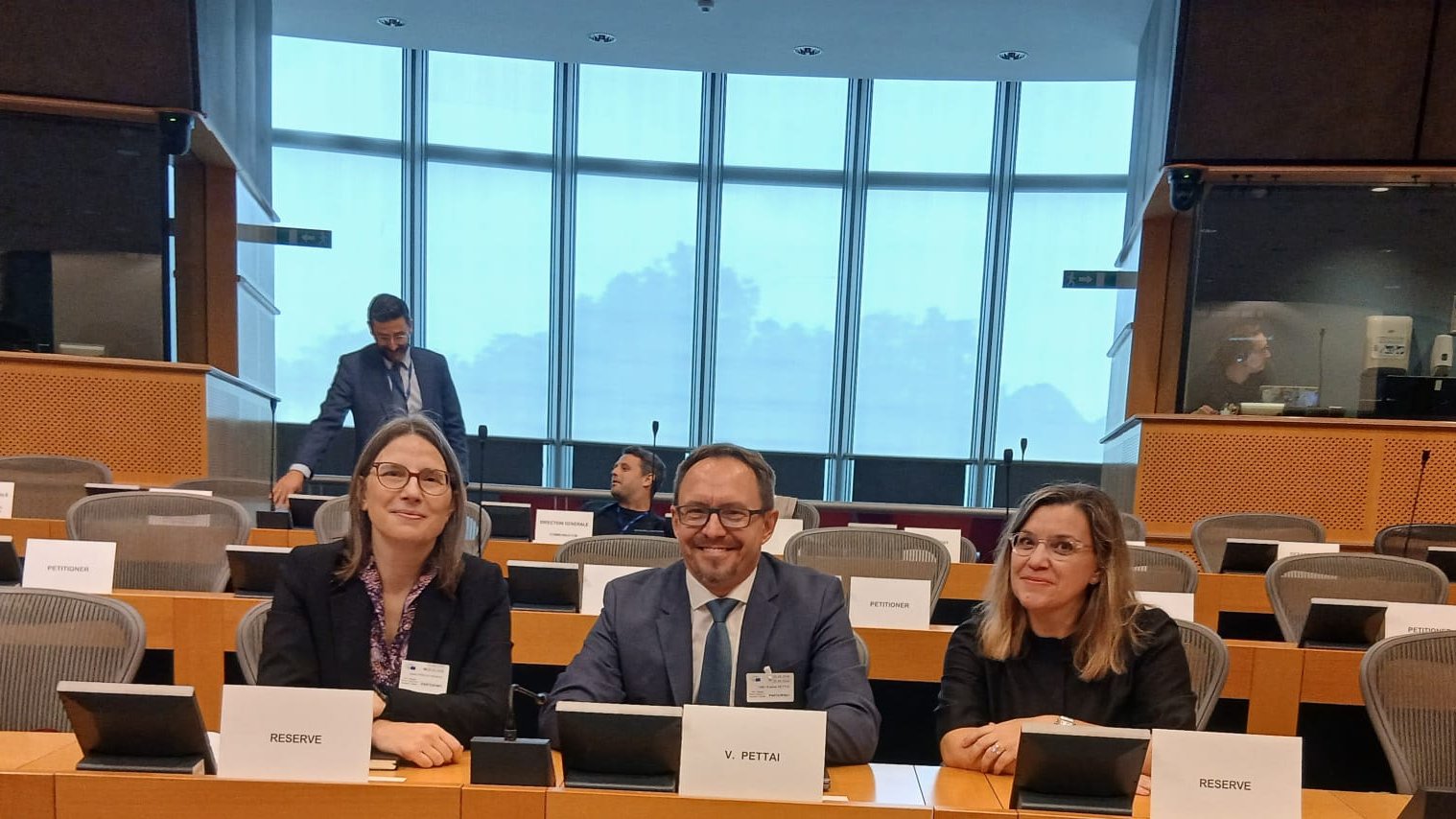
It is not every day that we have the opportunity to present our work at the heart of the European Union. On 28 September, the European Centre for Minority Issues (ECMI) was invited to Brussels to contribute to a workshop before the European Parliament’s Committee on Petitions (PETI).
The session focused on an important question for the EU enlargement process: how can the rights of national minorities be effectively monitored and strengthened in candidate countries?
ECMI Director Vello Pettai attended the event together with Senior Researchers Ljubica Djordjević and Kyriaki Topidi. The three researchers presented the main findings of a comprehensive briefing commissioned by the European Parliament’s Policy Department for Citizens’ Rights, Equality and Culture.
The briefing builds on ECMI’s 2024 White Paper, EU Enlargement and National Minorities: Lessons from the Past and Challenges for the Future, hjand takes a closer look at how minority rights are monitored during the EU accession process.
Comparing EU and Council of Europe Monitoring
The report addresses two closely connected research questions:
- How do the European Union’s monitoring mechanisms for national minority rights in enlargement countries compare with those of the Council of Europe?
- Where do the two systems complement each other, and where do they differ in their assessment of minority rights?
Key Findings
One of the report’s central findings is that EU monitoring of minority protection differs from traditional international monitoring mechanisms. Rather than assessing compliance with a specific international convention, the EU evaluates minority protection primarily in the context of a country’s readiness for membership.
Because the EU has only a limited body of legislation specifically addressing national minority protection, its assessment criteria are not always uniform. In practice, the EU has increasingly drawn on Council of Europe standards and instruments to provide a framework for its evaluations.
At the same time, the EU has considerable leverage over candidate countries during the accession process. The prospect of EU membership, combined with the Union’s system of conditionality, gives it significant influence in encouraging reforms related to minority protection.
The Council of Europe generally has less political leverage. Its monitoring mechanisms, however, benefit from a combination of expert assessment and political oversight. This can contribute to greater consistency, impartiality and authority in the evaluation of minority rights.
The report also highlights an important political dimension. Despite the professional expertise underpinning the EU’s assessments, enlargement ultimately remains a political process. Decisions are made by EU member states, and countries with particular historical, political or kin-state relationships to minorities in candidate countries can at times play a disproportionately influential role.
Taken together, the findings suggest that the EU and the Council of Europe bring different strengths to the monitoring of national minority rights. The EU offers substantial political leverage during accession, while the Council of Europe provides established standards, institutional continuity and specialised monitoring expertise. Closer interaction between the two systems can therefore help strengthen minority protection throughout the enlargement process.
The briefing document will be formally published by the European Parliament and distributed to Members of the European Parliament.
A recording of the one-hour workshop is available via the European Parliament’s multimedia platform. The ECMI contribution begins at approximately 15:37.
Prof. Vello Pettai also spoke to EU Perspectives about the findings and their relevance for the future of EU enlargement.