National minorities in Moldova in the context of EU accession
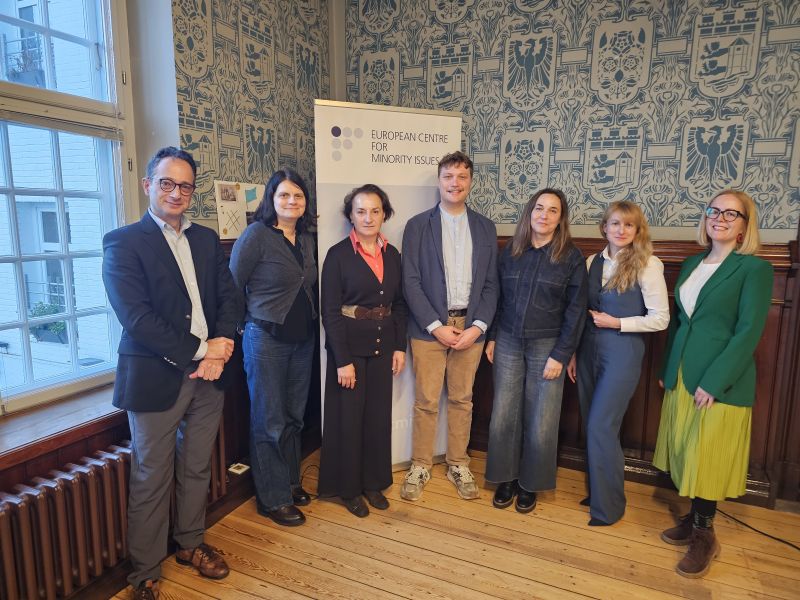
On 13 November 2026, the Equality and Inclusion Cluster of the ECMI organised a workshop “National minorities in Moldova in the context of EU accession.” The event brought together researchers and experts who discussed the challenges facing national minorities in Moldova in the context of European integration. Participants focused on three interlinked themes: minority inclusion and Euroscepticism on Moldova’s EU path, autonomy and identity in Gagauzia, and the legacy of the Transnistrian conflict and its implications for minority and human rights provisions.
The opening panel focused on the complex interplay between minority integration, language policy, and European integration:
- Natalia Mirimanova presented on "Patterns and paradoxes of Moldova’s national minorities’ Euroscepticism: the need for a multi-dimensional approach," examining the nuances of minority attitudes toward the EU.
- Inna Șupac explored political inclusion and public perception in her talk, "Euroscepticism or Exclusion? National Minorities and Moldova’s Path to the EU".
- Irina Cojuhari (participating online) addressed legal frameworks in her presentation, "Language policy and the prospects for ratification of the European Charter for Regional or Minority Languages".
The second panel shifted attention to the Autonomous Territorial Unit of Gagauzia, discussing center-periphery dynamics and identity politics:
- Zdenka Machnyikova outlined institutional relations in "Gagauz Autonomy and the Changing Centre–Autonomy Settlement".
- Tim Wenzel provided insights into local socio-cultural dynamics in "Ethnic Identity in Gagauzia".
The final panel examined human rights and integration challenges connected to the Transnistrian conflict:
- Marina Gorbatiuc analyzed post-conflict societal structures in "Frozen borders, fluid identities: Transdniestrian conflict legacy and its impact on integration".
- Olgun Akbulut addressed governance and legal accountability in "Who Bears Responsibility for Minority and Human Rights Protection in Transnistria?".
The intensive day of academic exchange concluded with formal closing remarks summarizing key takeaways across all three sessions. Many thanks to all participants for their valuable input and knowledge exchange. We look forward to further cooperation with you in the future!